






(With many thanks for the Peckinpaugh bio written by Peter M. Gordon on Baseball Reference.)
I take advantage of the Yanks' lallygagging vacation sojourn in California to examine the career of a man who has been much in the news lately, thanks to George Lombard, Jr., tying his consecutive error streak at shortstop.
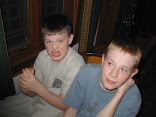
That is Roger T. Peckinpaugh, seen here on the right, with the famous "Midget Infield" of the old Washington Senators.
Peckinpaugh was an Ohio boy, who signed with the Indians, but was soon traded to the Yankees for the immortals Jack Lelivelt and Bill Stumpf. The deal opened the way for Cleveland to put Ray Chapman, the man who would later be killed by a pitched ball, at short, in a game where Peck was playing the same position for the Yanks—just the first of several strange events Roger would be involved in during his career.
At the Polo Grounds, Peckinpaugh quickly won the starting shortstop job on a bad Yankees team. In his first full season, 1914, he stole 38 bases but hit only .223. Still, already known as "the calmest man in baseball," Peck was named team captain.
Much more significantly, near the end of the season Roger, still just 23, became the youngest manager in major-league history, when the O.G. Peerless Leader, Frank Chance, decided to pack his bags and go home. Peck took over a team mired in the second division.
"The Yankees were a joy club," Peckinpaugh would later write. "Lots of joy and lots of losing. Nobody thought we could win and most of the time we didn't. But it didn't seem to bother the boys too much. They would start singing songs in the infield right in the middle of a game."
Peckinpaugh's "There's no singing in baseball" regime brought a terrible, sixth-place club home at 10-10 in its last 20 games.
The next year, the club was bought by some serious men, the colonels, Ruppert and Huston, and they installed a manager old enough to vote. But Roger seemed very popular with his teammates, warblers or not, and remained captain.
Just how good a player he was remains open to debate.
Peck was generally a below-average batter even in the deadball days. A pull hitter without power, he was easily retired by the constant shifts he faced—and never adjusted to. His main contribution at the plate was the sacrifice bunt, running up the 8th highest total of SFBs in big-league history.
He kept his job mainly because he was widely considered one of the best shortstop in the show.
"...the spectacle of Peckinpaugh, slinging himself after groundballs, throwing from out of position and nailing his man by half a step was an American League commonplace," kvelled longtime Washington Post sportswriter Shirley Povich.
All told, he would lead AL shortstops five times in assists, six times in double-plays, and twice in defensive WAR. The secret, according to Peck, was the Star plug tobacco that he chewed constantly.
"[It] was licorice-flavored, and it made my glove sticky," he would confess. It also helped darken the baseball, "and the pitchers liked that. The batters did not, but, what the hell, there was only one umpire."
This may not have been quite as efficacious a trick as Roger thought, for he also made lots of errors.
Lots and lots and lots of errors. Never fewer than 26 in a full season, more than 40 seven times, and a career-high 54 in 1917. But then, back in the day, gloves were small—and perhaps too sticky?—and scorers handed out errors if a line drive did not actually take one's hand off, so who knows?
The livening of the baseball seemed to bring Peck's bat to life, too. He hit .305 in 1919, and had two more decent years at the plate in 1920 and 1920, compiling a career-high 8 home runs each season.
But in his first World Series, he hit just .179 and made a critical error in Game 8 (yes, it was best-of-nine) against the Giants, allowing the only run in a 1-0 loss that decided the Series. It also wrecked a great World Series for Waite Hoyt, who had pitched two shutouts previously, and would have tied Christy Mathewson for a record three in the Fall Classic, if not for Ol' Licorice Glove.

Peck was now 30, and the Yankees—then a terribly hard-hearted organization that did not let aging mediocrities clutter up the roster forever—traded him to the Red Sox with three other, marginal players and the requisite $100,000.
In return, they got an undisputed gloveman at short, Everett "Deacon" Scott (who would hold the consecutive-games played record before Gehrig), and outstanding pitchers Bullet Joe Bush and Sad Sam Jones (not to be confused with Toothpick Sam Jones, I am not making this up).
That trio finally put the Yanks over the top, and won them their first World Series title.
Peck, meanwhile, was moved on to Washington, where he found something of a second life. In 1924, the Senators won their first pennant, and Roger hit a walk-off double to win Game Two. He pulled a muscle in the game, but came back, "heavily bandaged," in Game Six—something Povich called, "the gamest exhibition I ever saw on a baseball field."
Peckinpaugh had two hits and a walk, and made a terrific stop of an Irish Meusel smash to preserve the Nats' 2-1 lead with one out in the ninth. Roger had to be carted off the field, but Washington would hold on and won it the next day.
In 1925, the Senators repeated. Peck got off to a good start but was showing his age, playing in only 125 games. In the World Series, he made a record 10 errors—a record that holds to this day—in 7 games.
In the last game, Roger Peckinpaugh went from goat to hero to goat, maybe faster than anyone in World Series history.
With the great Walter Johnson trying to win his third game of the Series on a bad, drizzly day at Pittsburgh's Forbes Field, Peck dropped a pop fly in the seventh that allowed the Bucs to tie the game at 6-6.
In the top of the eighth, he homered to give Washington the lead again—only to make a wild throw in the bottom of the eighth to give the Pirates a 9-7 win.
With that error, the calmest man in baseball became the only player ever to make a game-losing error in the last game of a World Series...twice.
What's more, he became the only player ever to prevent two, Hall-of-Fame pitchers from winning a record-tying, three games in a single World Series with his glove work.
The writers, in their collective wisdom, gave him the MVP for the 1925 season. This was despite the fact that Peckinpaugh was, by any rational measure, only about the 10th most valuable player on his own team, and maybe the third best shortstop in the league.
It must be remembered that, at the time, there were often silly restrictions on MVP voting, such as not allowing someone to repeat as most valuable player. The sportswriters seem to have seen something about Peckinpaugh that maybe didn't show up on the stats sheet. He had got serious MVP votes after poor seasons in 1922 and 1923, and even back in 1914—perhaps as a tribute to his stepping in as playing manager.
And...it could be that, once again, the writers did not have the slightest idea of what they were seeing on the field before them, every day of their working lives.






 Posts
Posts


13 comments:
AMAZING stuff, Hoss. Thanks for it.
"They would start singing songs in the infield right in the middle of a game."
THIS IS HILARIOUS!!! This one's for the Pecker!!!
Courtesy of Led Zeppelin's "The Ocean":
Singing to an ocean, I can hear the ocean's roar
Play for free, play for me and play a whole lot more, more!
Singing about good things and the sun that lights the day
I used to sing on the mountains, has the ocean lost its way?
Sitting round singing songs until the night turns into day
Used to sing on the mountains, but the mountains washed away
Now I'm singing all day long for the fans in the upper deck
They are dressed in midnight blue and cheering on the Peck!!!
By the way, what did the "T" in Roger T. Peckinpaugh stand for? Tecumsah? Thomas? Travis? Tristan? Tyler? Those are my guesses.
Wikipedia says "Thorpe"
Another fantastic read thank you for posting
I never would've guessed that one!
I think my choices sound better than Thorpe!
Too bad he isn't related to Sam Peckinpah.
Too Bad, I say.
GREAT PIECE, HOSS !
Have you considered becoming a writer for a living ?
Thanks Hoss.
Enjoyable read as always.
The Peckster!
Thanks, guys! But I really depended a lot on Mr. Gordon for that one. Peckinpaugh's career really speaks to how some ballplayers get forgive and some don't, for reasons that don't obviously make sense.
Another example is Beltran, who took that big third strike down the middle to lose the Mets the 2006 NLCS. Think the Yanks would've retired his number if that had been us?
Incidentally, watching the Rays slowly smother the Mets. TB is far and away the best team in the AL, not because they have such amazing talent, but because they all play good fundamental ball, and they can all do at least one thing.
The guys who can't hit, can field. The guys who can't field, hit or run.
We don't have that. Nor do we have a manager like Kevin Cash.
Hoss, I think the writers back in '25 were impressed by Peck's "underlying numbers." Sure, he made a lot of errors, but maybe that was due to his amazing range.
I doubt either of those things, but what the hell.
By the way, I ordered "Taking Manhattan" by Russ Shorto after reading your plug for the book. I had read "The Island at the Center of the World" some years back, so I'm looking forward to picking up where that left off.
Post a Comment