






We all see it. We ALLLL see it...

Don't stare. No need to gloat. No posting of Mr. McBroom. It's just the wild card standings. Nothing big. In case you missed them...

No celebrations. You hear that, juju gods? Nobody partying. Yesterday brought just a routine, doubleheader sweep over a team that's happened to own us since April. It came about because of two ho-hum miracles in the late innings, which should have been the middle innings.
1. Jonathan Loaisiga somehow pitched out of bases loaded, no outs jam to save the first game. Have to give Aaron Boone credit: He never even warmed up a replacement, as Loaisiga drifted toward what could have been another catastrophic loss. He found his fastball and fanned the final two batters. Yeesh.

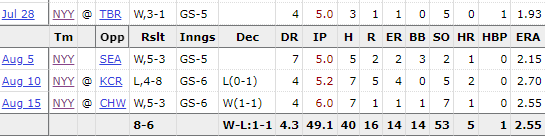
Tonight, the ultimate juju test: Andrew Heaney, whose outings have been brutal, takes the mound in a nine-inning game. Yes, nine - with a good chance that our bullpen will be pitching by the fourth, and we'll be down by five.
Of all the deadline deals orchestrated by Cashman, this one looks like a clunker, from the git-go. It could be (should be) Heaney's last Yankee start. The fact that they're using him speaks to the overworked staff. Or maybe there is a strategy we're not seeing.
Maybe this will be the blowout night, when the Yankees DON'T need a closer, when they'll be 10 runs behind - a night for Stephen Ridings, Nick Nelson, Lucas Luetge and the Amazing Kriske. This is a night when we play with house money. If we somehow win, Paul O'Neill will be chuckling, and the YES Fantasy Machine will be cackling in full force.
Still, someone must pitch the ninth. Until the real Aroldis returns, not the heart attack version, calls to the Yankee pen won't be greeted by Cellino & Barnes, but by champagne... in the visiting dugout. Some other tidbits...
1. Corey Kubler pitched three innings last night for Scranton. He walked two, gave up three earned runs and surrendered a HR. His rehab ERA stinks - 9.00. The Yankees applied their usual lipstick: It was his best outing yet, and it didn't end with an MRI appointment. Still, stints like these don't inspire confidence. Two weeks ago, we were awaiting Setback Sevy and Comeback Corey. Now, it's all Nasty Nestor and the Gil-Man.
2. Brett Gardner gets the most out of his speed, range and experience, but his arm looks shot. Last night, his throws from shallow centerfield were rolling to second base. We may cringe when Jonathan Davis comes to bat, but Boone almost has no other choice. But here's the question: Can Joey Gallo play CF? Can Aaron Judge? Once Andrew Rizzo returns, especially if Luke Voit's bat heats up, that's the full-tilt lineup.
3. Down below nowhere, The Martian is not hitting. Jasson Dominiquez went 0-3 last night in low Single A, and while it's clearly too soon to sound any alarms, we are learning once again that big bonus prospects look their best when not playing. Dominiquez has struck out 41 times in 114 at bats. Of course, he'll play winter ball, and the Yanks have him on an aggressive schedule. He's only 18. Still, when you hype a player to the degree the Yankees have done, he gets watched. Right now, he's not hitting. Just sayin.'
4. So, who WILL pitch the eighth and ninth tonight? One advantage to having Heaney take the ball: If we're down by 10, Voit can pitch. Hmmm. Where's Mike Ford? Have we uncovered a plan?








 Posts
Posts


